
Dia Internacional da Língua Materna promove inclusão por meio do multilinguismo

ONU alerta para desaparecimento de um idioma a cada duas semanas; cerca de 43% das 6 mil línguas existentes estão ameaçadas de extinção; somente menos de 100 idiomas circulam na esfera digital.
Eventos realizados em várias regiões do mundo celebram o Dia Internacional da Língua Materna neste 21 de fevereiro. O tema de 2021 é “Fomentando o multilinguismo para a inclusão na educação e na sociedade”.
Para além de permitir uma maior integração, a Organização das Nações Unidas para Educação, Ciência e Cultura, Unesco, defende que os idiomas e o multilinguismo podem promover a meta dos Objetivos de Desenvolvimento Sustentável de “não deixar ninguém para trás”.

Foto: Pnud Povos indígenas criaram e falam uma grande maioria das 7 mil línguas mundiais
Primeira infância
A agência ressalta ainda que a educação com base na primeira língua deve começar nos primeiros anos de vida, porque os cuidados e a instrução durante a primeira infância são a base da aprendizagem.
Em Paris, a Unesco marca a data acolhendo um evento virtual coorganizado com o Bangladesh. Na sexta-feira, uma conferência online abordou políticas e práticas inclusivas no ensino e aprendizagem multilíngues e como melhorar a integração pelo multilinguismo, a linguagem de sinais, a educação e os cuidados na primeira infância.
Em Addis Abeba, na Etiópia, outro evento abordará a questão de professores e a educação na língua materna na África. O evento agendado para a próxima quarta-feira será realizado em parceria com o Instituto Internacional para o Desenvolvimento de Capacidades no continente.
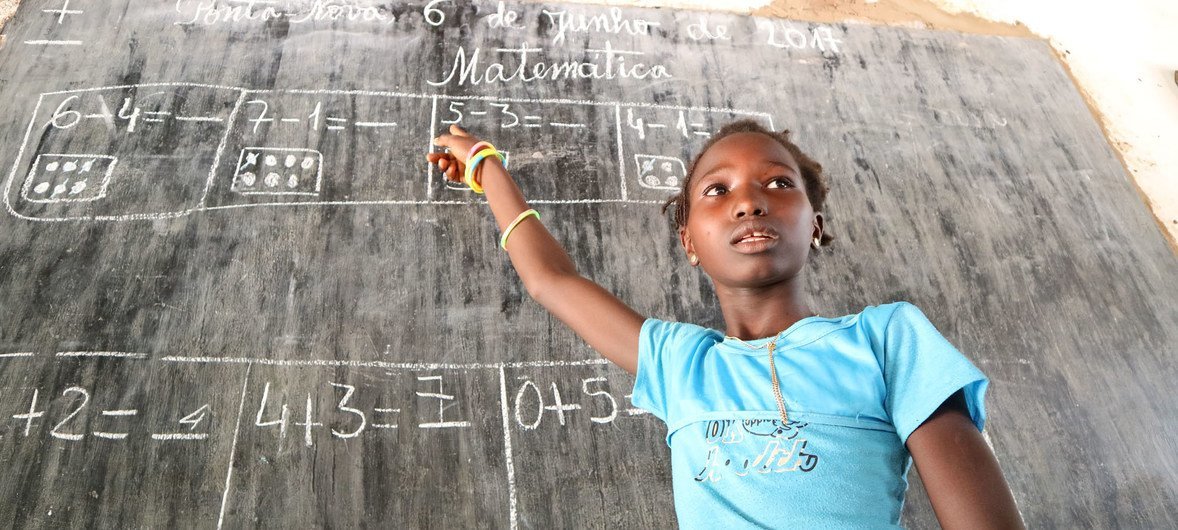
Foto: Unicef/Pirozzi De acordo com a ONU, a cada duas semanas uma língua deixa de existir e com ela a herança cultural e intelectual local
Extinção
De acordo com a ONU, a cada duas semanas uma língua deixa de existir e com ela a herança cultural e intelectual local. Pelo menos 43% dos cerca de 6 mil idiomas atualmente falados no mundo poderão desaparecer.
Algumas centenas de idiomas estão integrados em sistemas educacionais e no domínio público, e menos de 100 são usados no mundo digital. Globalmente, 40% da população não tem acesso à educação na língua que fala ou compreende.
A Unesco assinala progressos na educação multilíngue quando é compreendida a importância da língua materna, em especial na primeira fase de escolaridade. A agência fala ainda do compromisso com avanços nesta questão no setor público.

Foto: Pnud Filipinas/Orange Omengan Especialistas alertam que 40% das línguas indígenas correm o risco de desaparecer por completo.
Conhecimento e culturas
A Unesco realça que os idiomas sustentam sociedades multilíngues e multiculturais, porque “transmitem e preservam o conhecimento e as culturas tradicionais de forma sustentável”.
A celebração do Dia Internacional da Língua Materna foi proposta pelo Bangladesh na Conferência Geral da Unesco de 1999. A data foi proclamada pela Assembleia Geral das Nações Unidas em 2002.
Celebrating International Mother Language Day- 2021
Webinar and International Virtual Calligraphy Exhibition
Theme: “Fostering Multilingualism for Inclusion in Education and Society”.
Organized by: Indira Gandhi National Centre for the Arts, New Delhi & BHASHAKRITI
Knowledge Partner: UNESCO New Delhi.
Register in advance for this webinar:
https://us02web.zoom.us/webinar/register/WN_hNh7nRTjTpCQTAKGH0JmLw
After registering, you will receive a confirmation email containing information about joining the webinar.
Government of Canada Unveils Plan to Modernize Official Languages Act
News release
OTTAWA, February 19, 2021
After holding extensive consultations with Canadians, the Government of Canada has presented its vision for modernizing and strengthening the Official Languages Act. More than ever, the time has come to examine the linguistic situation in Canada, acknowledge the evolution of official languages over half a century, and to address the challenges they face.
The Honourable Mélanie Joly, Minister of Economic Development and Official Languages, presented the Government of Canada’s intentions to modernize and strengthen the Official Languages Act and its related instruments today. Titled English and French: Towards a Substantive Equality of Official Languages in Canada, the document proposes a range of changes and new measures to establish a new linguistic balance across the country.
The proposed reform addresses the official languages issues that most concern Canadians. The world is changing and the dramatic growth of digital technology and international trade encourages the use of English. That is why the Government of Canada must assume its responsibility to further protect the use of the French language, support the vitality of official language minority communities and improve the governance of federal institutions. The vast project stemming from this reform is divided into six main priorities:
- Recognize the different linguistic dynamics in the provinces and territories and the explicit addition that the Act could not undermine the maintenance and enhancement of Indigenous languages.
- Provide opportunities for learning both official languages by encouraging, among other things, the offer of French immersion classes.
- Foster the development of the full potential of official language minority communities by supporting the vitality of their institutions in key sectors such as immigration, the education continuum, health, culture and justice.
- Protect and promote the use of French everywhere in Canada, including Quebec, through, among other things, new rights regarding language of work and services in enterprises under federal jurisdiction in Quebec and in other regions of the country with a strong Francophone presence.
- Strengthen the exemplary nature of the State and the bilingualism of the Government of Canada, from the appointment of bilingual judges to improving the support offered to federal public servants in learning their second language.
- Include a periodic review of the Act and its implementation to ensure its relevance to Canada today and in the future.
The Honourable David Lametti, Minister of Justice and Attorney General of Canada, and the Honourable Jean-Yves Duclos, President of the Treasury Board, as well as all government ministers, will help Minister Joly ensure the success of the measures targeting the justice system and federal institutions.
The Government of Canada is committed to modernizing and strengthening the act so it can better meet the hopes and expectations of Canadians who speak both official languages and expect the Government of Canada to do more to protect them. This commitment is reflected in the most recent Speech from the Throne, which explored the special situation French faces in North America, including Quebec. It also mentioned that defending the rights of francophone minorities outside Quebec and defending the rights of the anglophone minority in Quebec are a priority for the government. The official languages reform document is an important step in achieving these commitments.
Minister Joly invites all Canadians in official language minority communities and linguistic majorities, including Francophones in Quebec, to explore this document and make it their own. This reform, which will pave the way for Canada’s official languages for the next 50 years, is a priority for all Canadians.
Actividades del Día Internacional de la Lengua Materna y Día Nacional de las Lenguas Nativas
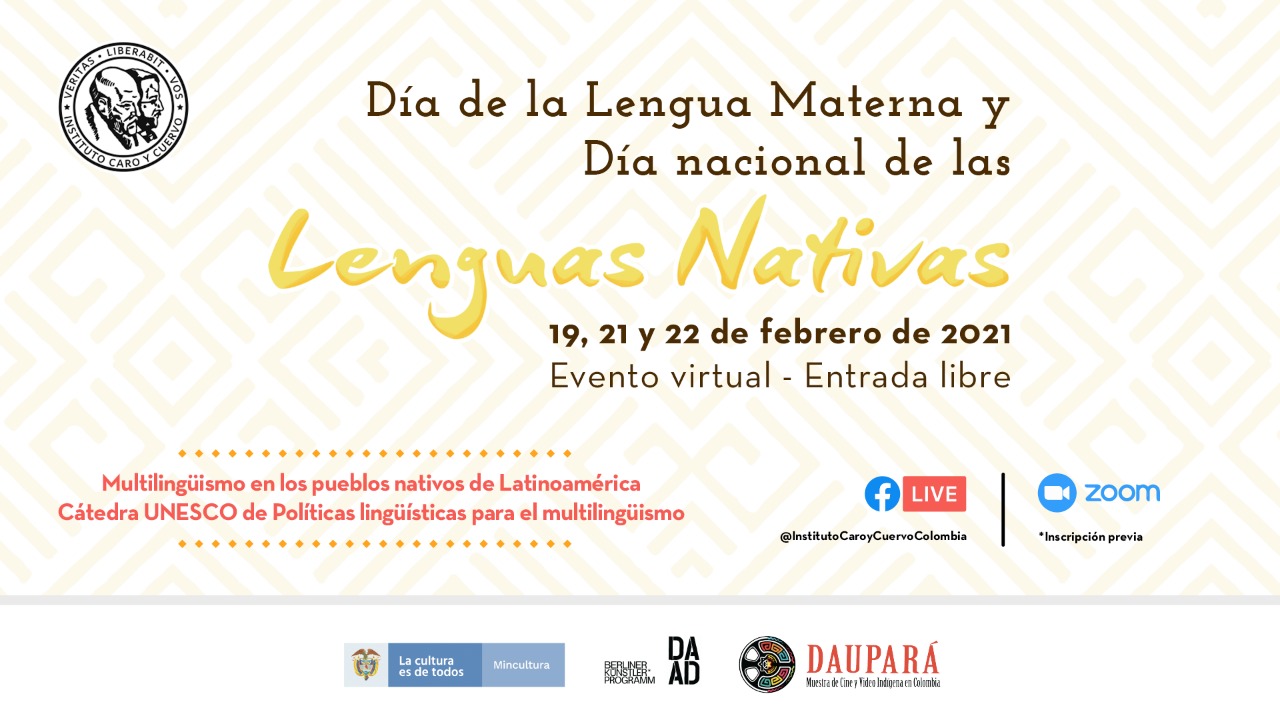
19 de febrero a partir de las 9:30 a.m. (BOG) hasta las 4:00 p.m. (BOG).
9:30 a.m. Carmen Millán – Instituto Caro y Cuervo, Bogotá, Colombia
Ponencia: Mi lengua materna ya no es seca – Bienvenida
10:00 a.m. Rainer Enrique Hamel – Universidad Autónoma Metropolitana Campus Iztapalapa, Ciudad de México, México
Ponencia: Fomentar la revitalización de las lenguas indígenas en los espacios sociales de prestigio
11:00 a.m. Sabine Gorovitz – Universidad de Brasilia, Brasil
Ponencia: La mediación lingüística como garantía de los derechos de las minorías lingüísticas que no hablan portugués en Brasil
2:00 p.m. Zoraida Fiquere – Secretaría de Educación de San Andrés
Ponencia: Ethnic and community language and culture in education: trilingual education
3:10 p.m. Thiago Chacón – Universidad de Brasilia
Ponencia: El multilingüismo en el Vaupés y la historia de larga duración en Amazonia
Compartimos las indicaciones para entrar a la plataforma Zoom, el evento se desarrollará en dos jornadas; una en la mañana y la otra en la tarde – hora (Bogotá), por favor seleccionar la jornada de su interés.
Jornada mañana
Unirse a la reunión Zoom https://zoom.us/j/98018082896?pwd=R2RiZWJselA3SGpXakZxaVNmdy9lZz09
ID de reunión: 980 1808 2896
Código de acceso: 006302
Jornada tarde
Unirse a la reunión Zoom https://zoom.us/j/95716127183?pwd=RERqMnRtbTNST3NiUUxlNHA0YlRXQT09
ID de reunión: 957 1612 7183
Código de acceso: 420441
El evento se transmitirá por el Facebook LIVE del Instituto en o en nuestra página

Новости
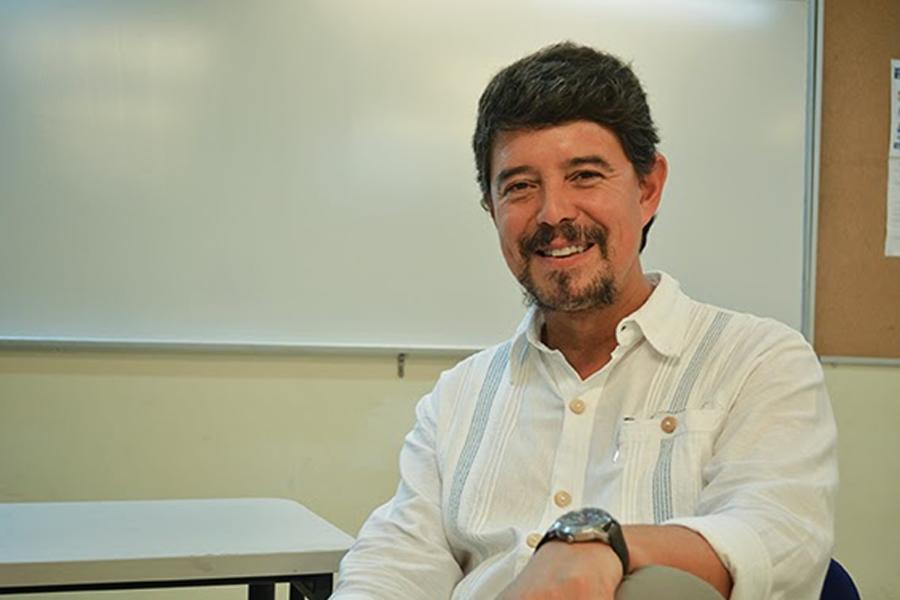
Фото: из открытых источников
Жилван Мюллер де Оливейра: «Монолингвизм обесценивает другие языки коренных народов»
Профессор, заведующий кафедрой ЮНЕСКО университета Санта-Катарина Жилван Мюллер де Оливейра (Gilvan Muller de Oliveira) отметил, что сегодня только около 1,5 процентов бразильского населения – коренных народов и мигрантов, говорит на других языках. «Менее 3,5 миллионов из 215 миллионов бразильцев говорят на других языках, кроме португальского. Монолингвизм, идентификация португальского языка как бразильского идентификационного знака обесценивает другие бразильские языки. Это явление имеет глубокие корни в общей идеологии», – поделился профессор.
Большинство языков коренных народов Бразилии находятся в состоянии уязвимости и большого риска исчезновения, подчеркнула исследователь университета Санта-Катарина Мария Кристина Македо Аленкар (Maria Cristina Macedo Alencar). «Только после принятия Конституции 1988 года Бразилия продвинулась в обеспечении прав коренных народов на сохранение языков, а также на укрепление и возрождение языков в школах. Эти законы приняты с целью гарантии, что в школах могли говорить и преподавать на языках коренных народов. И чтобы учебная программа была ориентирована на культуру коренных народов», – рассказала она.
Жилван Мюллер де Оливейра выделил три социальных технологии, которые используются в Бразилии для создания многоязычия: официализация языков на местном уровне, признание языков национальным достоянием, пропаганда двуязычия. «Особенности языковой политики многоязычия в Бразилии включают в себя принцип снизу вверх, мобилизацию языковых сообществ, региональных ресурсов, которые не зависят от центрального правительства. Также ресурсы из уже существующих государственных программ и связь между внутренней и внешней политикой», – сказал лектор.
Профессор рассказал о двуязычных школах, где обучающимся предлагается испано-португальское обучение на протяжении всего базового курса школьного образования. Кроме того, он отметил, что в этих школах особое внимание уделяется обменным программам преподавателей стран МЕРКОСУР. Проект создан в 2005 году и включает 26 школ в пяти странах.
В ходе семинара Жилван Мюллер де Оливейра ответил на вопросы участников семинара – преподавателей и студентов СВФУ, учителей иностранных языков школ Якутии о влиянии многоязычия на этнос, языковой политике в Бразилии, проблемах монолингвизма и многоязычия.
Следующий семинар «Многоязычие и политика в отношении иностранных языков в Бразилии и России: диалог» состоится 19 февраля, где выступят исследователи Северо-Восточного федерального университета.
Справка:
Жилван Мюллер де Оливейра – профессор, известный бразильский филолог. Занимается лингвистической политикой Бразилии и поддержкой малых языков, работает в области языковой политики и истории языка.

Forlibi – Fórum Permanente das Línguas Brasileiras de Imigração

I Seminário de Gestão em Educação Linguística da Fronteira do MERCOSUL
